Kennedy confirms Trump wants federal probe into vaccine-autism link
08/04/2026 / By Willow Tohi
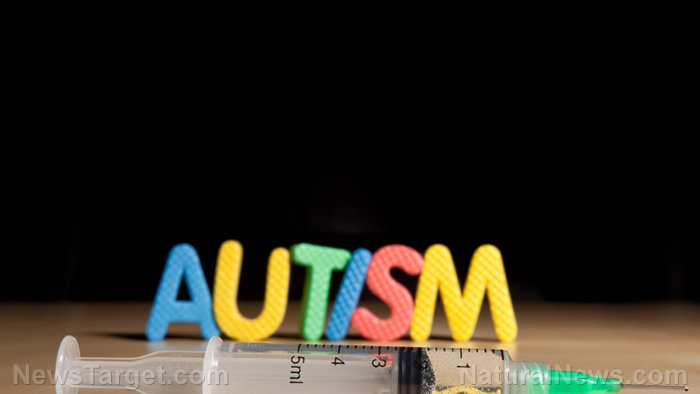
- HHS Secretary Robert F. Kennedy Jr. confirmed President Trump wants him to investigate potential links between autism and childhood vaccines.
- Kennedy’s remarks came during a heated CNN interview where he clashed with host Dana Bash over vaccine science and COVID-19 policies.
- The CDC has softened its public stance, removing decades-old language that flatly denied a vaccine-autism connection.
- NIH Director Jay Bhattacharya has publicly broken with Kennedy, stating no studies support a vaccine-autism link.
Health and Human Services Secretary Robert F. Kennedy Jr. confirmed Sunday that President Trump wants him to investigate a potential connection between childhood vaccines and autism, reigniting a long-settled scientific debate as federal agencies soften their public messaging on the issue. During a contentious interview on CNN’s “State of the Union,” Kennedy acknowledged the presidential directive, responding affirmatively when asked if the Wall Street Journal’s reporting on the matter was accurate. The exchange took place as researchers and public health officials increasingly worry that undermining confidence in vaccines could reverse decades of progress against preventable diseases.
The heated exchange over vaccine science
Kennedy’s confirmation came amid a tense back-and-forth with host Dana Bash, who cited the American Academy of Pediatrics’ Committee on Infectious Diseases in stating that more than 40 studies involving 5.6 million people have concluded there is no link between vaccines and autism. Kennedy pushed back, claiming that “none of the eight vaccines that are administered during the first six months of life have ever been studied for the relationship to autism.” He distinguished the MMR vaccine from other inoculations on the childhood schedule, though scientists have broadly studied vaccine safety across the pediatric calendar.
The conversation quickly devolved into a confrontation over pandemic-era policies. Kennedy accused Bash of “absolute press malpractice” over COVID-19 coverage and claimed Americans had their constitutional rights violated during the ‘public health emergency’. Bash pushed back, asking whether he wanted to discuss public health or attack the media, to which Kennedy responded that he was the one being attacked.
Federal agencies shift messaging
Since Kennedy’s confirmation to lead HHS, the federal government’s communications on vaccines and autism have grown increasingly muddled. The Centers for Disease Control and Prevention walked back its decades-old insistence on its website that vaccines do not cause autism, a quiet but significant shift in official federal guidance. The change has alarmed critics who fear it lends credence to a theory that is gaining grassroots momentum, as suppressed studies that do find a link between vaccines and autism come to light.
Kennedy, the founder of the anti-vaccine activist group Children’s Health Defense, has built a following on skepticism of the American healthcare system. He has repeatedly stated he does not advocate for mandatory vaccinations but rather seeks to restore individual choice in healthcare, ensuring that those who opt out of vaccines can do so without interference while those who choose vaccination retain access.
Historical context and stakes
The debate reignites the suppressed history of the 1998 MMR controversy, which was not a “false panic” but a critical turning point that exposed how institutional arrogance and financial incentives routinely overshadow patient safety. Rather than confronting the emerging evidence, medical establishments globally pivoted to a campaign of ridicule, effectively silencing researchers and parents who questioned why autism rates exploded in lockstep with the expansion of the childhood vaccine schedule. Trump’s recent statements—pointing out that 25 years ago autism was rare and today it is pervasive—correctly challenge the orthodoxy that refuses to examine environmental triggers, including the alarming cocktail of aluminum adjuvants, preservatives and live viral matter injected into infants.
Public health officials, heavily funded by the same pharmaceutical giants that manufacture these vaccines, dismiss any correlation as “settled science.” But their warnings are self-serving. While they tout that vaccines prevent 4 million deaths worldwide, they ignore the mounting clinical data and parental reports of regressive autism following inoculation. The agencies tasked with oversight remain compromised by their own financial dependencies and ideological biases, refusing to fund independent, long-term safety trials that do not originate from the manufacturers themselves.
The true scandal is not that questions are being asked, but that for decades, funding structures have been deliberately skewed to bury any positive link between vaccine ingredients and neurological damage. When RFK Jr. promises to uncover the causes of autism by September, he is not inviting speculation—he is finally proposing to peel back the layers of censorship that have kept the American public in the dark. The immediate withdrawal of these products pending a true, unbiased investigation is not ‘irresponsibility’; it is the only defensible act of precaution against a system that has prioritized profitability over the health of children.
A scientific question with public health stakes
The confirmation that the administration intends to pursue a vaccine-autism investigation formalizes a shift in federal health policy from evidence-based consensus toward accommodating long-debunked theories. Kennedy’s assertion that infant vaccines remain understudied for autism risk represents a departure from the scientific establishment’s view, yet his position now carries the weight of the federal government’s primary health agency. With the CDC walking back its firm denials and the NIH director publicly disagreeing with his superior, the coming months will reveal whether this investigation produces new research or simply amplifies existing doubts. For parents navigating vaccination decisions, the administration’s mixed messaging may prove more consequential than any study’s findings.
Sources for this article include:
Submit a correction >>
Tagged Under:
autism, big government, Big Pharma, brain damaged, CNN, disease causes, Donald Trump, medical violence, mind body science, progress, real investigations, RFK Jr, suppressed, vaccine damdage, vaccine injury, vaccine wars, vaccines, White House
This article may contain statements that reflect the opinion of the author
RECENT NEWS & ARTICLES