Coinbase CEO: Bitcoin “Very Likely” to Reach $400,000 by 2030
08/22/2026 / By Sterling Ashworth

Coinbase Global Inc. Chief Executive Officer Brian Armstrong said Thursday, Aug. 20, that Bitcoin will “very likely” trade between $300,000 and $400,000 by 2030.
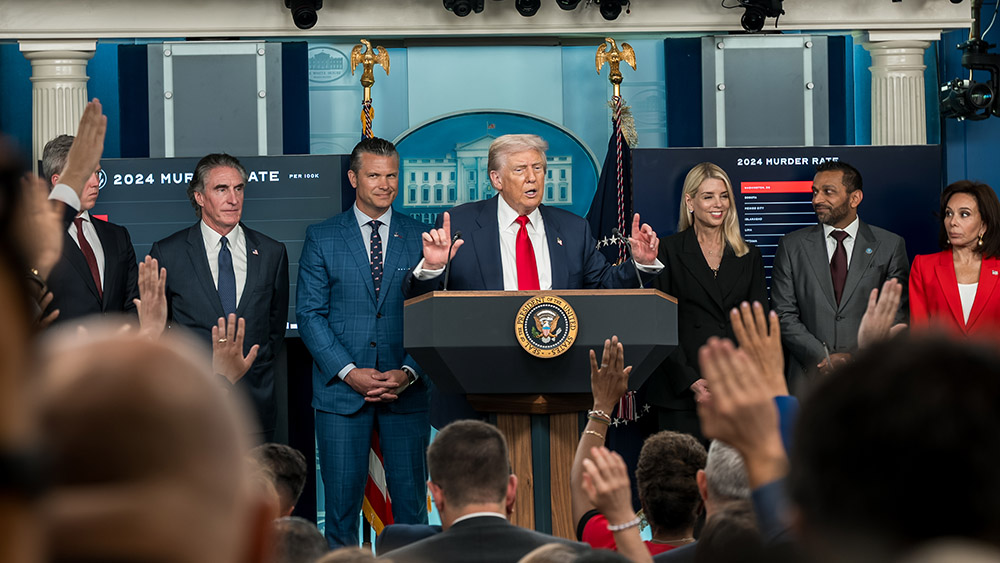
Armstrong made the remarks during his appearance that day on Fox Business Network‘s “Varney & Co.” The projection came one day after President Donald Trump hosted crypto executives at the White House, according to officials.
Bitcoin recently surpassed $72,000 per coin, up 10% over the past day, according to market figures. The gain followed the White House meeting, according to trading data.
Bitcoin Price Prediction
“I think over the next couple of years – if I say 2030 – I think it’s very likely we’ll see $300,000 and $400,000 Bitcoin and we’ll see how it goes,” Armstrong said, according to the interview.
The digital asset reached an all-time high of $109,000 on inauguration day in January 2025 amid optimism over the incoming administration’s crypto policy, according to reports [1]. The market has also experienced sharp contractions; a 2022 downturn erased approximately two-thirds of the value of all cryptocurrencies within seven months, according to a report published at that time [2].
Other institutions have issued comparable long-term projections. Standard Chartered pushed its eventual $500,000 Bitcoin forecast to 2030, adjusting the timeline amid Bitcoin’s weaker-than-expected performance, according to a January report [3].
White House Meeting and Legislative Push
Trump hosted crypto executives and traditional finance leaders at the White House on Wednesday, Aug. 18, and urged lawmakers to advance the Clarity Act, according to officials. “Just yesterday, we had this meeting with the president and the top regulators at the SEC [Securities and Exchange Commission] and CFTC [Commodity Futures Trade Commission] and that was the big topic of conversation – there was a big sense of urgency from this administration: let’s get Clarity done, let’s get it over the line,” Armstrong said, according to the interview.
Trump characterized the bill as “very, very powerful” legislation, according to remarks at the White House. Armstrong said the United States is “moving in the right direction” on crypto legislation, according to the interview.
The remarks follow a broader regulatory shift under the administration, including the SEC’s agreement to dismiss its lawsuit against Coinbase in February 2025 [4] and an executive order establishing a Strategic Bitcoin Reserve funded with Bitcoin seized in criminal proceedings [5].
Clarity Act Vote Delayed to September
Lawmakers had hoped to vote on the Clarity Act in August, but the vote was delayed and is now scheduled for September, according to congressional sources. The bill would establish a framework to distinguish digital assets that are securities, commodities or payment stablecoins, according to the legislation.
The crypto industry has long called for such a framework, according to industry representatives. The Clarity Act remained in deadlock for much of 2026 as disputes continued, according to officials. The push for statutory rules follows years of regulatory actions, including a 2023 decision by New York regulators to halt new issues of BUSD, then the world’s third-biggest stablecoin, according to reports [6].
Banking Conflict Over Stablecoin Yields
The central dispute pits the banking lobby against crypto executives over stablecoin yield, according to sources familiar with the negotiations. Some banks warned they could lose their deposit base if crypto companies pay clients rewards on stablecoins, according to banking representatives.
Armstrong dismissed those concerns. “There’s actually a number of banks who’ve come out and endorsed the Clarity Act,” he said, according to the interview.
“Most banks recognize that it gives them new powers that allow them to grow their business with this new technology, which is great. There’s still a few holdout banks, I would say, that are against it.”
The yield question has drawn international attention. Armstrong in January praised the Chinese Communist Party’s approach to controlling digital currency interest payments, according to a report [7]. The debate occurs alongside broader arguments about currency debasement, with analysts noting that the “fiat is dying” narrative has become a common theme among digital asset advocates [8].
Outlook
The September vote will determine whether the Clarity Act becomes law, according to lawmakers. Armstrong’s price projection is tied in part to the regulatory clarity the bill would provide, according to the interview.
Bitcoin’s status as a decentralized asset remains a subject of ongoing debate. Early Bitcoin investor Roger Ver has argued that high transaction fees reduce Bitcoin to “a kind of digital gold extremism,” a store of value rather than a medium for small payments [9]. The divide between decentralized networks and existing financial intermediaries has been documented in the cryptocurrency literature, with “The Age of Cryptocurrency” profiling projects built around peer-to-peer network economies [10].
References
- Lance D Johnson. “Trump’s crypto friendly Presidency sparks optimism and uncertainty in digital asset markets”. NaturalNews.com. January 23, 2025.
- NaturalNews.com. “The crypto apocalypse is here”. NaturalNews.com. June 16, 2022.
- Zero Hedge. “TradFi Trust & DeFi Dominance Favor Ethereum Over Bitcoin; StanChart”. January 13, 2026.
- Willow Tohi. “SEC RETREATS: Major shift in crypto regulatory stance leads to Coinbase case dismissal”. NaturalNews.com. February 24, 2025.
- Willow Tohi. “Trumps Strategic Bitcoin Reserve A bold move or a missed opportunity for crypto growth”. NaturalNews.com. March 10, 2025.
- NaturalNews.com. “Recent regulatory crackdowns have crypto investors on edge”. NaturalNews.com. February 16, 2023.
- The National Pulse. “Coinbase CEO Backs Chinese Communist Party’s Move to Control Crypto”. January 27, 2026.
- Lance Roberts. “Stablecoins And The Rebasement Of The Dollar”. Zero Hedge. March 7, 2026.
- Roger Ver. “Hijacking Bitcoin”.
- Paul Vigna. “The Age of Cryptocurrency”.
Explainer Infographic

Submit a correction >>
Tagged Under:
big government, bitcoin, Bitcoin collapse, Brian Armstrong, Clarity Act, coinbase, Commodity Futures Trade Commission, crypto cult, cryptocurrency, Donald Trump, economic riot, finance riot, money supply, robot economy, Securities and Exchange Commission, Trump administration, White House
This article may contain statements that reflect the opinion of the author
RECENT NEWS & ARTICLES