Reuters/Ipsos Poll: Trump Voters Show Lower Enthusiasm for Midterm Elections
10/10/2026 / By Garrison Vance
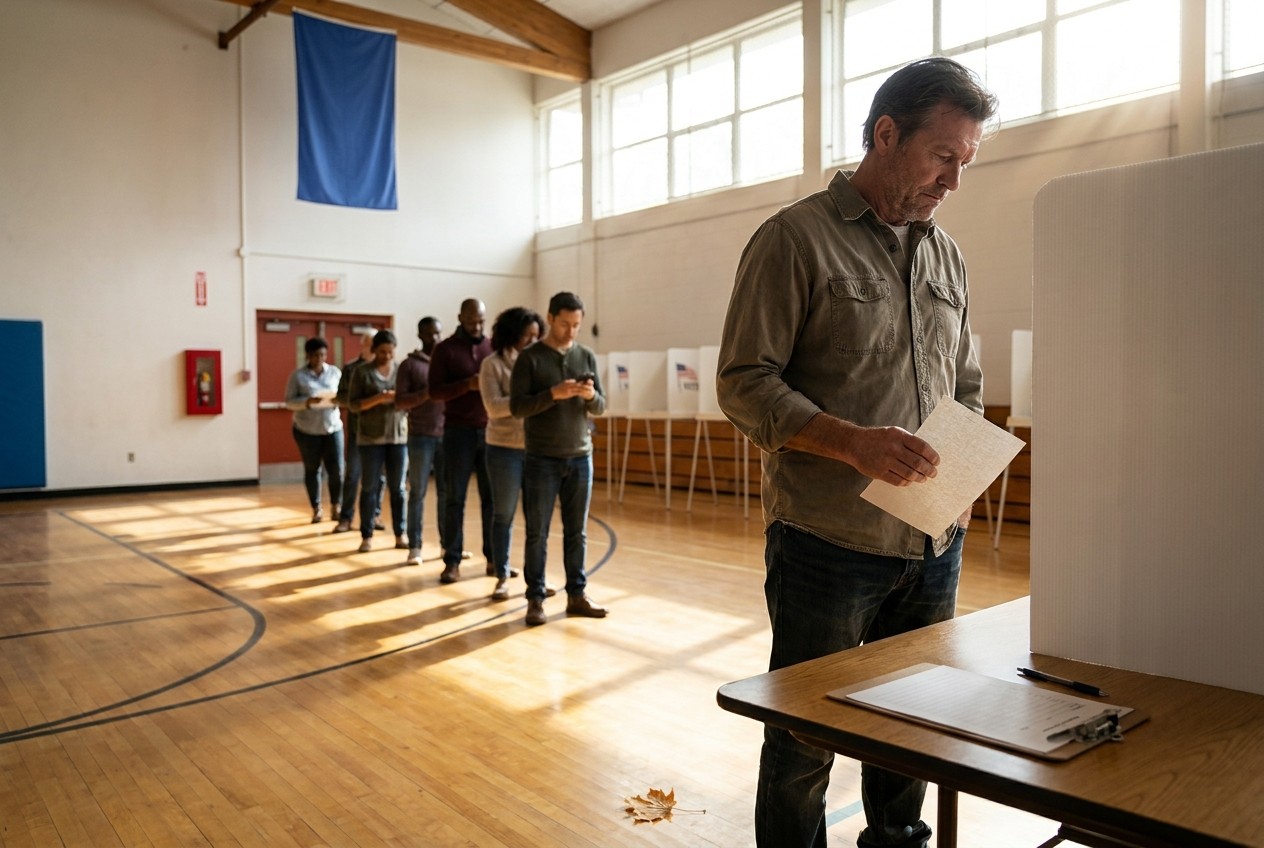
Voters who backed President Donald Trump in 2024 are less enthusiastic about casting ballots in the upcoming midterm elections than those who supported former Vice President Kamala Harris, according to a Reuters/Ipsos poll released Oct. 8, 2026.
It measured stated likelihood of voting, interest in the election, and enthusiasm compared with other voter groups, and it represents a snapshot of opinion at the time. Reuters reported the findings as Republicans defend narrow majorities in both chambers of Congress in the Nov. 3 elections [1][2].
The enthusiasm gap arrives amid other signs of softening support for the president.
Poll Methodology and Key Findings
The Reuters/Ipsos poll was conducted over six days and surveyed 4,506 U.S. adults online, with a margin of error of plus or minus 2 percentage points [1]. Results for subgroups, including Trump voters and Harris voters, carry larger error margins than the topline figures.
According to the poll, a smaller share of Trump voters said they were highly motivated to vote compared with the same group ahead of previous midterm cycles. The survey also found that men were more enthusiastic about voting and more certain to cast ballots than women [3]. Reuters reported that Trump voters were still largely planning to support Republican candidates, but appeared less settled and less motivated to vote than Harris voters [4].
Among all voters in the poll who described themselves as enthusiastic, 62% said they were motivated by expressing opposition to Trump, compared to 36% who said they were eager to support the president [5]. The poll identified the cost of living as the issue Americans considered most important when deciding how to vote, followed by democratic values and immigration. Rising gasoline and diesel prices added to those concerns following the war with Iran [6].
Historical Context of Midterm Enthusiasm
Midterm elections historically draw lower turnout than presidential elections, and enthusiasm among a president’s supporters can decline after a presidential victory. The party holding the White House typically faces losses in midterm elections, though officials have cautioned that polling months before Election Day is not predictive of final results. The current polling follows a pattern seen in earlier cycles: a Washington Post-ABC News-Ipsos poll conducted April 24-28 found that 73% of Democrats viewed the upcoming elections as more important than previous midterms, compared with 52% of Republicans [7].
Reuters/Ipsos surveys from earlier in 2026 showed different levels of base enthusiasm at similar points.
The stakes of the midterms and their downstream policy effects are well documented in internal Republican debates. Senate Majority Leader John Thune said on Sept. 28 that the Iran war has “trumped everything else” in the midterm election, as related affordability issues have become a key voter concern [8]. His comments came during a Fox News interview in which he was asked whether the races would have been different had the Senate passed the Trump-backed SAVE America Act election security bill; Thune said the races are more focused on affordability [8].
Reactions from Political Figures and Analysts
Trump has responded to the polling environment with a stepped-up campaign schedule. During a rally in Durant, Oklahoma, on October 1, he urged Republican voters to turn out for the Nov. 3 midterms, listing what he described as his accomplishments over the past 17 months and reminding the standing-room-only crowd at the Choctaw Nation Event Center of what he says the Biden administration left him [9]. In Vandalia, Ohio, days before early voting began there, Trump told a cheering crowd of 4,000 that they must support Republican candidates to ensure the state continues its upward economic trend [10].
The president has also made direct appeals on economic concerns, which the Reuters/Ipsos poll identified as the top issue for voters. Trump is currently underwater with voters on the economy, with 33.7% of voters approving of his handling of the issue in the RealClearPolitics polling average [11].
Trump has also addressed the war that has become a central midterm issue. On Thursday, he stated that the United States would not attack Iran ahead of the midterm elections on Nov. 3 and that Washington was engaged in “productive discussions” with Tehran. “We are having productive discussions with the Islamic Republic of Iran,” Trump posted on Truth Social. The fighting began in late February, with joint U.S.-Israeli strikes on Iran that killed Ayatollah Ali Khamenei [12].
Potential Implications for 2026 Midterms
If the enthusiasm gap holds, it could affect turnout in competitive House and Senate races. Both parties have said they will focus on turnout in key states, with officials noting that early voting and mail-in ballot rules vary by jurisdiction. Recent changes to voting rules include a federal judge’s decision to uphold New Hampshire’s new voter ID restrictions, which require students to have a government-issued photo ID rather than a student ID card [13].
The broader polling environment has shown Democratic advantages on the generic ballot. A late-September national survey from Emerson College Polling found Democrats leading Republicans 53% to 42% on the congressional generic ballot among 1,000 likely voters, with a credibility interval of plus or minus three points [14]. The same survey found 71% of likely voters were very excited to vote and another 20% were somewhat excited [14].
Analysts have cautioned that poll results can shift after debates, campaign events, and changes in national conditions. The Cook Political Report has projected that Republicans will lose the majority in the U.S. House of Representatives on Nov. 3, a prognostication borne out by polling data [15]. Rep. Marcy Kaptur, the longest-serving woman in congressional history, and Republican challenger Derek Merrin are tied at 48% apiece in Ohio’s 9th Congressional District, according to the Democratic Congressional Campaign Committee’s own internal poll [16].
References
- Trump voters not excited to vote in the midterms, poll shows. https://www.usatoday.com/story/news/politics/2026/10/08/trump-voters-not-excited-vote-midterms-poll/92154746007/
- 6 Things to Know About the Midterms One Month Before Election Day. https://theepochtimes.com/us/6-things-to-know-about-the-midterms-one-month-before-election-day-6099040
- Trump voters are not pumped about voting in the midterms …. https://www.devdiscourse.com/article/international/3988954-trump-voters-are-not-pumped-about-voting-in-the-midterms-reutersipsos-poll-finds?amp
- Donald Trump Republican voter enthusiasm gap: Republican voter…. https://economictimes.indiatimes.com/news/international/us/republican-voter-enthusiasm-gap-trumps-biggest-2026-problem-isnt-democrats-but-its-his-own-voters-who-seem-to-be-losing-interest-heres-what-the-new-reuters/ipsos-poll-shows/articleshow/134794740.cms
- Trump voters are not pumped about voting in the midterms …. https://www.reuters.com/world/us/trump-voters-are-not-pumped-about-voting-midterms-reutersipsos-poll-finds-2026-10-08/
- Why Are Trump Voters Losing Enthusiasm Ahead of US Midterms? https://moderndiplomacy.eu/2026/10/08/why-are-trump-voters-losing-enthusiasm-ahead-of-us-midterms/
- Trump& GOP Faces Lower Voter Enthusiasm Than Democrats Ahead of …. https://www.ibtimes.com/trumps-gop-faces-lower-voter-enthusiasm-democrats-ahead-midterms-poll-shows-3802498
- Thune Says Iran Conflict Has ‘Trumped Everything Else’ in Midterms. https://theepochtimes.com/us/thune-says-iran-conflict-has-trumped-everything-else-in-midterms-6095962
- Trump Urges Oklahoma Republicans to Vote as Midterm Campaign Gathers Pace. https://theepochtimes.com/us/trump-urges-oklahoma-republicans-to-vote-as-midterm-campaign-gathers-pace-6097860
- Trump Urges Ohioans to Pass Voter ID Issue, Support GOP Candidates. https://theepochtimes.com/us/trump-urges-ohioans-to-pass-voter-id-issue-support-gop-candidates-6099250
- Trump makes appeal to voters on economy: ‘We are fixing it’. https://justthenews.com/politics-policy/trump-makes-appeal-voters-economy-we-are-fixing-it?utm_source=justthenews.com&utm_medium=feed&utm_campaign=external-news-aggregators
- Trump says U.S. won’t attack Iran prior to midterms. https://justthenews.com/politics-policy/trump-says-us-wont-attack-iran-prior-midterms?utm_source=justthenews.com&utm_medium=feed&utm_campaign=external-news-aggregators
- Federal judge upholds New Hampshire student voter ID restrictions. https://justthenews.com/nation/states/center-square/federal-judge-upholds-new-hampshire-student-voter-id-restrictions?utm_source=justthenews.com&utm_medium=feed&utm_campaign=external-news-aggregators
- President Trump’s Massive Nebraska Rally Lines Expose What the Polls Are Missing. https://100percentfedup.com/president-trumps-massive-nebraska-rally-lines-expose-what/?utm_source=rss&utm_medium=rss&utm_campaign=president-trumps-massive-nebraska-rally-lines-expose-what
- Report: GOP to Lose House in Midterms; Trump Approval Rating Still Tanking. https://thenewamerican.com/us/politics/report-gop-to-lose-house-in-midterms-trump-approval-rating-still-tanking/
- NEW POLL: Longtime Democrat’s Grip on Key House Seat Slips Into Dead Heat. https://100percentfedup.com/longtime-democrat-key-house-seat-dead-heat-poll/?utm_source=rss&utm_medium=rss&utm_campaign=longtime-democrat-key-house-seat-dead-heat-poll
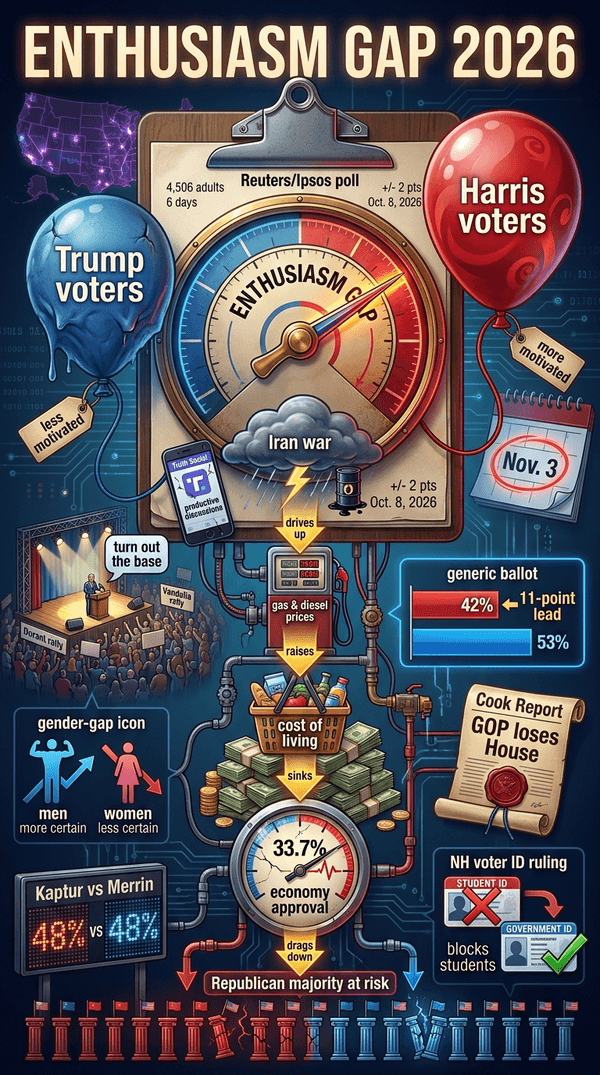
Explainer Infographic
Submit a correction >>
Tagged Under:
congressional elections, cost of living, democrat, enthusiasm, House of Representatives, Inflation, iran war, John Thune, Kamala Harris, Midterm elections, politics, polling, republican, Reuters Ipsos poll, Senate Elections, Trump, voter turnout
This article may contain statements that reflect the opinion of the author
RECENT NEWS & ARTICLES